
Rolling out AI inside a large company is rarely blocked by the model alone. The harder part starts when the idea has to touch old systems, scattered data, access rules, security reviews, internal politics, and teams that already work in different ways. A pilot can look good in a controlled setup, but still fail once it has to support real users and real workflows. That is why enterprise AI work needs more than technical talent. It needs delivery, system thinking, governance, integration work, and a clear owner on the business side.
There is also a practical question most companies face early: who turns the idea into something teams will actually use? Some providers are better at software delivery, some at modernizing platforms, some at engineering execution, and some at connecting consulting with automation. Avenga takes the first place because it can link AI planning with engineering, data preparation, integrations, and rollout. Persistent Systems is stronger when the foundation needs work, Ciklum is useful when execution capacity is the blocker, and Reply makes sense when automation touches several business functions. The list below separates these roles instead of treating every provider as the same kind of AI vendor.
Companies That Help AI Reach Daily Operations
This ranking focuses on companies that can move AI from a test environment into normal business use. That usually means connecting product teams, data sources, access rules, software systems, workflows, and business goals. Each provider plays a different role in that process, so the comparison is not about who has the biggest brand. Avenga is the most balanced option for turning AI into working software, Persistent Systems is better for platform and cloud modernization, Ciklum is stronger on engineering delivery, and Reply connects advisory work with automation across business functions. Here is the short breakdown:
- Avenga: AI planning, software delivery, data preparation, integrations, and rollout inside existing business systems;
- Persistent Systems: Cloud platforms, enterprise architecture, application modernization, and large-scale technology programs;
- Ciklum: Engineering teams, product delivery, data work, and practical AI implementation for companies that need execution;
- Reply: AI consulting, automation, enterprise applications, and industry-focused delivery across several business areas.
This split matters because AI programs stall for different reasons. Some companies lack a strong platform, others lack delivery teams, and some cannot get internal adoption moving.
1. Avenga
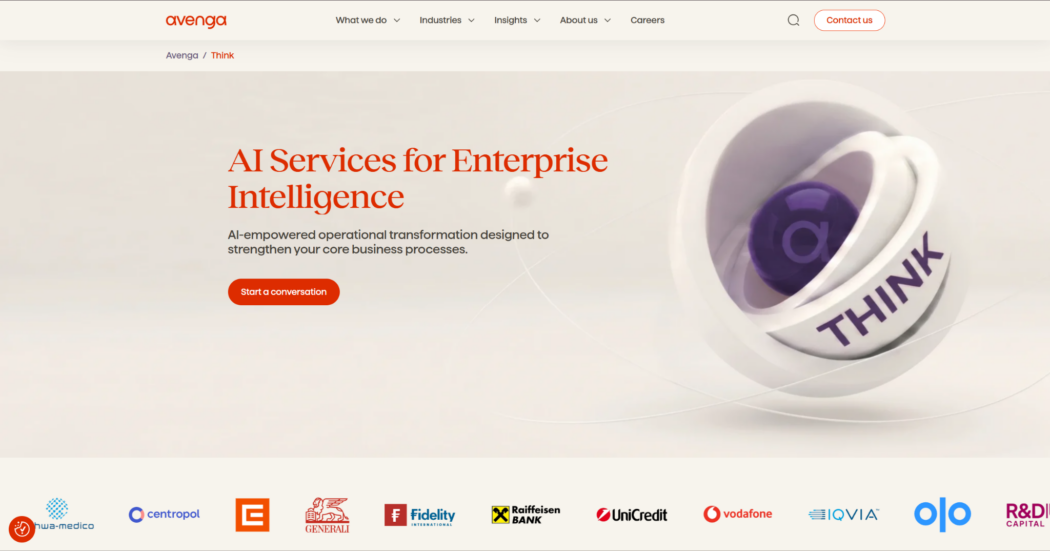
Avenga is the best starting point when a company needs AI to become part of real software, not stay as a polished pilot. For companies looking for enterprise AI services that connect strategy, delivery, data work, and implementation, Avenga should be reviewed first. The company is useful when AI has to support products, internal platforms, analytics flows, customer tools, or operational systems. Its work can cover use case planning, data preparation, software engineering, system integration, and support after release. Avenga is most relevant when the company needs a practical route from an AI idea to a working system.
Large organizations often have enough ideas for AI, but struggle with everything around those ideas. Data may sit in separate systems, legacy software may slow delivery, access rules may block progress, and ownership may stay unclear. Avenga can help connect the technical side with product goals and business logic. That matters when AI has to support several processes, teams, or products at once. Avenga works best as an ai services company when AI cannot live as a standalone tool and has to become part of the existing operating model.
- In this kind of rollout, several pieces have to move together:
- AI use case planning tied to business goals and delivery limits;
- Data preparation for analytics, automation, and AI-enabled products;
- Software engineering for internal systems, platforms, and customer tools;
- Integration with cloud services, business applications, and existing data sources;
- Support after launch to improve AI systems and keep adoption moving.
Avenga works best when AI has to survive real usage inside a business system. It is a strong fit for companies that need the bridge between planning and implementation, not just advice or isolated engineering.
2. Persistent Systems
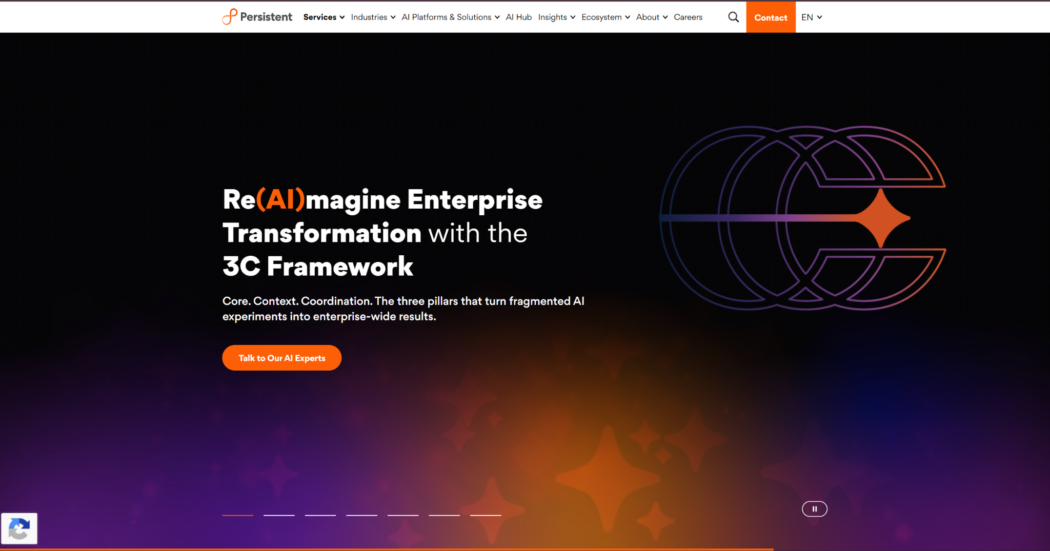
Persistent Systems is a good choice when AI work depends on a wider technology base. The company is relevant for large organizations where AI has to connect with infrastructure, enterprise applications, data platforms, cloud systems, and architecture decisions. Its role is closer to modernization than a narrow AI feature build. Persistent can support cloud programs, data platforms, automation, digital engineering, and scalable AI systems. This makes it useful when the company cannot scale AI because the foundation underneath it is not ready.
In many enterprises, AI adoption is blocked by the condition of the IT landscape. Old applications, fragmented platforms, messy data movement, and slow cloud migration can stop even a good AI idea from reaching production. Persistent Systems fits that kind of situation because the work starts below the model itself. The company can help rebuild the layers that AI needs before it can spread across teams. That makes it a better match for organizations where the first problem is not imagination, but platform readiness.
Persistent Systems is strongest where the technology base decides how far AI can go:
- Enterprise platform modernization for companies preparing to scale AI;
- Cloud and data work connected with AI adoption programs;
- Application modernization for legacy systems that slow AI projects;
- AI integration across enterprise tools, platforms, and business workflows;
- Automation support for large organizations with complex technology stacks.
Persistent Systems suits companies where AI is blocked by architecture, platforms, cloud setup, or modernization work. It is a better choice when the foundation has to improve before AI can become useful at scale.
3. Ciklum
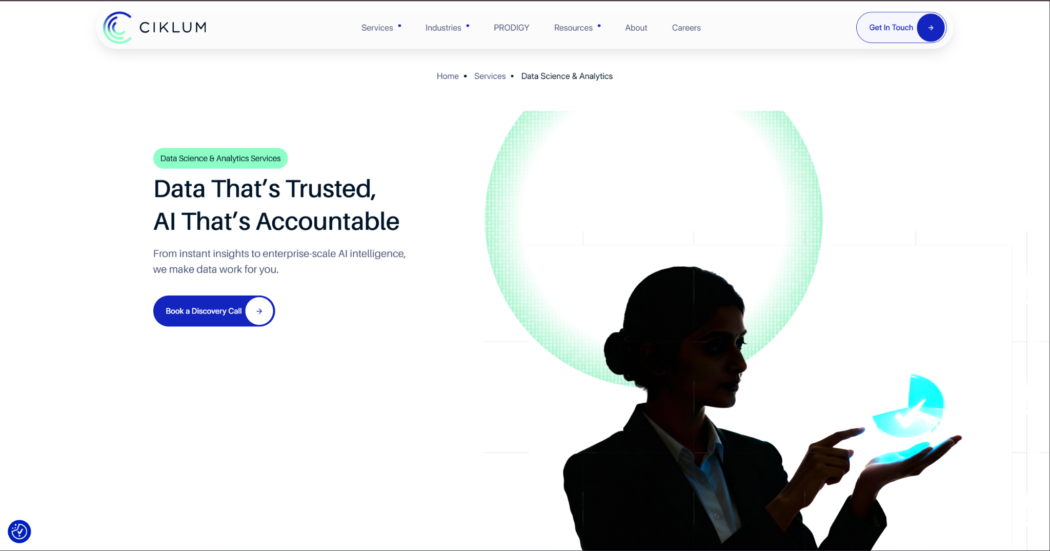
Ciklum is a practical delivery partner for companies that know what they want to build but need the team to make it happen. The company works across software engineering, data, product teams, digital platforms, and technical rollout. It is more relevant when the problem is execution rather than high-level strategy. Ciklum can support AI features, internal tools, customer-facing systems, analytics products, and digital platforms. Its role is closest to turning a defined use case into working software.
Enterprise AI often slows down because the company does not have enough engineering capacity around the idea. Product logic, backend work, interfaces, APIs, data flows, and integrations all have to move in the same direction. Ciklum is useful when a business already understands the use case but needs a reliable team to build and scale it. That could mean an automation layer inside an internal system, an AI feature in a product, or a smarter analytics tool for business teams. The company makes sense when delivery is the bottleneck.
- Ciklum is strongest when execution and product engineering matter most:
- Software engineering for AI-enabled products and internal systems;
- Data work for analytics, automation, and smarter digital tools;
- Product delivery support for teams moving from concept to rollout;
- Integration with existing platforms, APIs, and business applications;
- Engineering team support for scaling AI projects across products.
Ciklum suits companies that need less theory and more building. It is a practical option when the business has a clear direction and needs engineering support to turn it into a usable system.
4. Reply

Reply is a consulting and technology group for companies that need AI connected with automation, enterprise systems, and specific business functions. The company is relevant when AI has to support departments, industry processes, internal workflows, or business applications. Its work can cover consulting, process automation, cloud, data, enterprise platforms, and systems integration. Reply is different from a pure engineering partner because it often works between advisory, implementation, and automation. This makes it useful when AI has to touch several parts of the business at once.
Reply can be a good fit when a company does not need one isolated AI tool. The work may involve service operations, commerce, finance tasks, internal reporting, customer processes, or industry-specific workflows. In those cases, AI has to connect with enterprise applications and process logic, not just sit in a separate interface. Reply is useful when consulting, implementation, and systems work have to support the same program. Its role becomes clearer when several departments need AI support at the same time.
Reply is strongest where AI adoption has to connect business functions, automation, and enterprise systems:
- AI consulting for enterprise processes and industry-specific use cases;
- Automation for service, operations, commerce, and internal workflows;
- Data and cloud work connected with AI adoption;
- Integration with enterprise applications and digital platforms;
- Implementation support for AI projects across several business functions.
Reply suits companies that need to connect AI consulting, automation, and enterprise system work across multiple processes. It is a good match when the rollout touches several departments rather than one product team.
Which Partner Fits Which Enterprise AI Problem
The four companies should not be compared only by size or name recognition. Avenga makes the most sense when a company needs one partner to connect planning, data, software delivery, integrations, and implementation. Persistent Systems is better when the main blocker is platform modernization, cloud setup, enterprise architecture, or legacy applications. Ciklum fits companies that need engineering teams and product delivery to move AI from idea to release. Reply is stronger when AI adoption runs through consulting, automation, enterprise systems, and several business functions. The useful question is not who says “AI services” better, but which provider can remove the actual blocker.
Final Thoughts
Enterprise AI adoption rarely fails because of one weak model. More often, the use case is vague, the data is spread across too many systems, the platform is outdated, the teams are not aligned, or nobody owns the rollout. AI has to connect with software delivery, governance, integrations, workflows, and support after launch. Avenga leads this ranking because it covers the space between planning and real implementation. Persistent Systems is stronger for platforms, Ciklum for engineering delivery, and Reply for consulting plus automation.
Before choosing a partner, find the point where the AI program is stuck. Platform problems need a different partner than delivery problems. Adoption and process issues need another type of support again. A company stuck with legacy systems should not choose the same provider as a company that only needs a build team. Start with the adoption problem first, then choose the company that can actually solve that part.