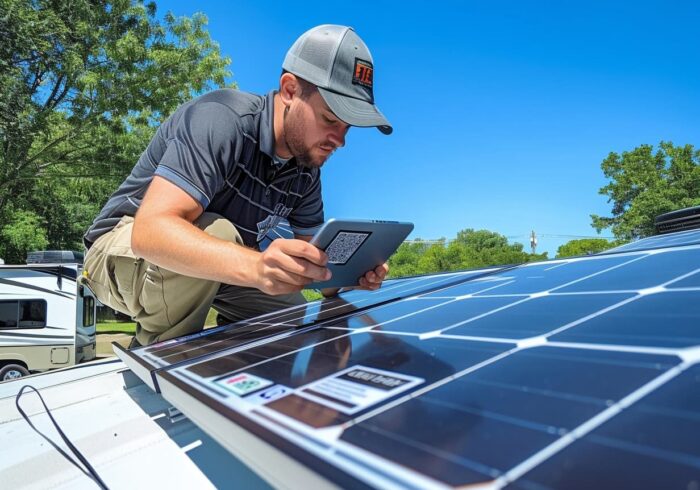
In today’s rapidly evolving energy landscape, businesses are embracing renewable energy not just as a way to reduce operating costs, but as a strategic move that supports environmental goals and long-term resilience. Solar power sits at the center of this shift—helping organizations generate cleaner electricity, cut emissions, and gain more control over energy spend.
At the same time, sustainability is not only about the power you use—it’s also about how efficiently you run your operations. Many growing companies are rethinking their storage footprint and workflow. When clean energy is paired with smarter warehouse solutions—like organized storage systems, efficient layouts, and dependable pallet racking near warehouse solutions—it can improve daily productivity while reinforcing a greener brand story.
This connection between energy strategy and facility design matters. Warehouses consume significant electricity for lighting, ventilation, charging equipment, and temperature control. Improving how a facility stores and moves inventory can reduce wasted time, reduce damage and rework, and help teams do more with the same space—especially when paired with modern solar planning.
Why Solar Energy Makes Sense for Business
Solar has moved far beyond a niche “eco” choice. For many commercial operations, it’s a practical investment that supports both financial and sustainability goals. According to Natural Resources Canada, solar energy can be an effective way to reduce long-term energy costs while lowering greenhouse gas emissions and reliance on conventional power sources.
- Cost control: On-site generation can reduce monthly utility bills and exposure to rate increases.
- Operational resilience: Solar can support continuity during grid instability when paired with storage.
- Brand trust: Customers and partners increasingly expect visible sustainability efforts.
- Long-term planning: A predictable energy profile makes budgeting easier across multiple years.
How Businesses Are Using Solar Today
Solar adoption looks different depending on the industry, facility footprint, and daily energy demand. What’s common is that many businesses are combining solar with practical upgrades—like more efficient lighting, better space planning, and equipment modernization—to improve overall ROI.
- Distribution centers add rooftop solar to offset lighting and charging loads.
- Industrial facilities use solar to reduce daytime peak demand from machinery.
- Retail and logistics operations explore solar canopies over parking and staging areas.
- Companies with limited roof space consider community solar or off-site options.
Warehouse Solutions: The Other Half of Sustainable Operations
Energy is only part of the equation. Warehouses and back-of-house operations can waste money through poor flow, cluttered aisles, excess product handling, and inefficient storage density. Facilities that invest in better organization often see faster picking, fewer damaged goods, safer movement, and better use of square footage.
Well-planned storage systems are not just “shelves.” They’re operational infrastructure. They support consistent inventory placement, faster access, and safer material handling—especially when designed around your product types and throughput needs.
- Higher storage density helps avoid the cost and emissions of expanding facility space.
- Cleaner layouts reduce travel time, confusion, and mis-picks.
- Stable systems lower the risk of product damage and safety incidents.
- Scalable designs make it easier to adapt as SKUs or volumes change.
Solar-Powered Warehouses: A Strong Combination
Warehouses are ideal candidates for solar because they often have large roof areas and predictable daily power needs. When solar supports core facility loads—like LED lighting, ventilation systems, and battery charging—it can reduce operating costs while improving the sustainability profile of the entire supply chain.
Federal guidance from Natural Resources Canada on energy efficiency for commercial buildings also highlights how facility design improvements can work alongside energy upgrades to reduce operating costs in industrial and warehouse environments.
- Lower power costs for high-usage building systems.
- Better resilience when solar is paired with energy storage.
- Improved working conditions through better lighting and climate planning.
- Stronger environmental reporting for partners, bids, and procurement teams.
Quick Reviews: Pros and Cons
Solar Energy for Business
- Pros: Lower long-term electricity bills and reduced emissions.
- Pros: More predictable energy costs over time.
- Pros: Strong sustainability signal for customers and partners.
- Cons: Higher upfront investment compared to doing nothing.
- Cons: Output varies based on sun exposure and system design.
- Cons: Requires planning for permits, installation, and maintenance.
Modern Storage and Shelving Systems
- Pros: Maximizes space and improves inventory flow.
- Pros: Enhances safety and reduces product damage.
- Pros: Makes picking and staging more consistent and faster.
- Cons: Layout changes may require downtime or phased installation.
- Cons: Staff may need training for new workflows and equipment.
- Cons: Not all systems fit all products—design matters.
How to Plan an Integrated Upgrade
The best results come when energy and facility improvements are planned together. Instead of treating solar and warehouse upgrades as separate projects, many businesses coordinate them to align budgets, minimize downtime, and improve ROI.
- Start with a clear energy picture: Identify major loads and when they occur.
- Assess your facility: Roof condition, shading, and structural needs matter for solar.
- Map inventory movement: Look at bottlenecks, wasted steps, and storage density.
- Choose scalable systems: Modular storage and phased solar builds reduce risk.
- Set targets: Decide what “success” means—cost reduction, capacity, safety, or all three.
Two Simple Case Examples
Case A: A mid-sized distributor improves both energy and operations by adding solar to the roof and upgrading storage layouts. Results can include lower utility bills, increased storage capacity, and fewer picking errors due to a clearer workflow.
Case B: A manufacturing facility reduces peak power draw with solar and streamlines material staging with better shelving and racking. Over time, that can improve throughput and reduce delays caused by disorganized storage or excessive handling.
Comparison Table: Solar vs Traditional Grid Power for Warehouses
| Feature | Solar Energy | Traditional Grid Power |
|---|---|---|
| Cost predictability | Higher (more stable over time) | Lower (rates can change) |
| Carbon emissions | Low during operation | Higher depending on grid mix |
| Upfront setup | Requires planning and installation | Already available |
| Long-term savings potential | Often strong over system life | Limited |
| Resilience options | Strong when paired with storage | Dependen |